Bats in France - Eurobats
Bats that live in France

About us and our activities and how to join us  HERE


Home

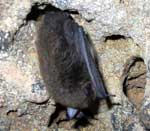
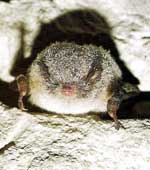
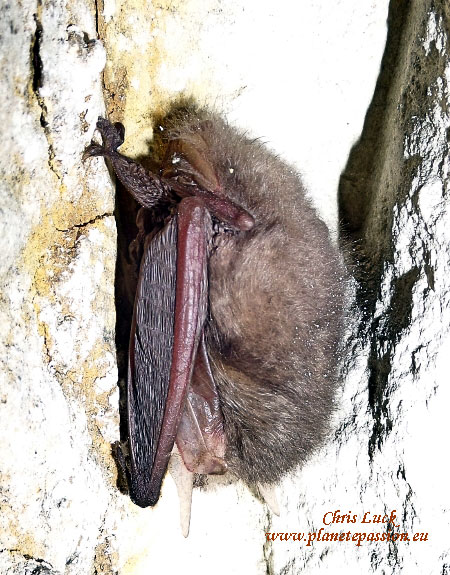
Photo-Whiskered-bat-France

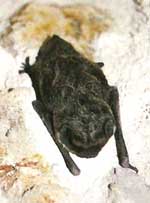
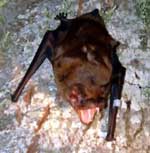
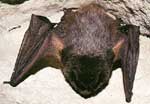
Photo-Serotine-bat-France

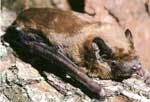
Photo-Noctule-Bat-France

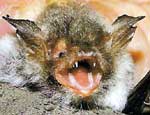
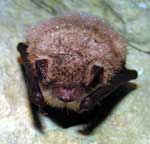
Photo-Natterers-Bat-France

Photo-Mediterranean-Horse-Shoe-bat-France

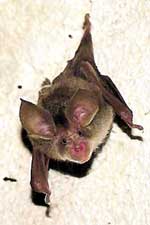
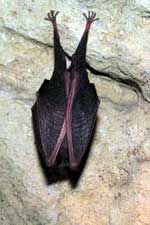
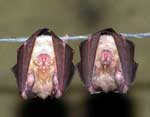
Photo-Lesser-horseshoe-bat-France

Photo-Leislers-Noctule-Bat-France

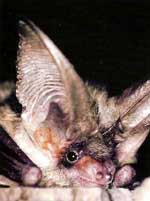
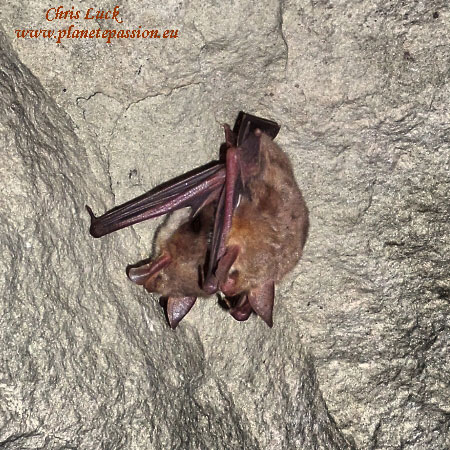
Photo-Grey-long-eared-bat-France

Photo-Greater-Noctule-Bat-France

Photo-Greater-mouse-eared-bat-France

Photo-Greater-horseshoe-bat-France

Photo-Geoffroys-bat-France

Photo-Daubentons-Bat-France

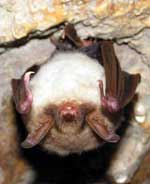
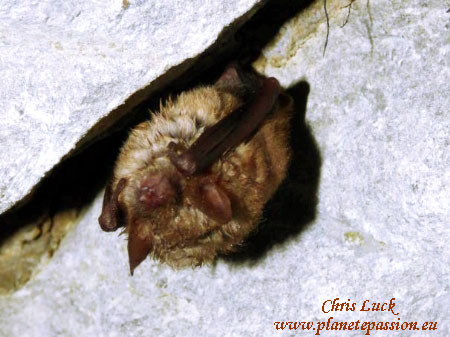
Photo-Bechsteins-Bat-France

Photo-Barbastelle-bat-France


Visit the new Forum HERE where you can ask questions, discuss French wildlife or find useful links.


Bats in France - Eurobats



LIST OF REGIONAL COORDINATORS FOR BAT ADVICE / ASSISTANCE  
 
Go staight to list of bats in France
 

In Europe there are a surprisingly high number of local and also national organisations dealing with the conservation of bats and their habitats. Many of them try to increase public awareness of  of bats and their needs. Special emphasis is placed on people, who host bat colonies in their houses, on dispelling misunderstanding and on close co-operation with the responsible nature conservation  bodies.

You can get involved in bat conservation, too! For this you don’t need to be a scientist, but to feel concerned about bats’ problems. If you are interested to learn more about these fascinating  flying mammals and to become an active bat conservationist, contact your local, regional or national Bat conservation group. You can find many relevant links on  http://www.eurobats.org/.


What you can do for bats in your daily life:

    ° Tolerate and maintain existing roosts in buildings, trees and caves, and provide new ones (e.g. bat boxes)

    ° Do not disturb bats while roosting, especially not during hibernation and maternity.

    ° Avoid the use of pesticides in your garden and in usage of remedial timber treatment agents in your house roof, both can lead to poisoning of bats. If an application is indispensable choose only products which do not harm bats.

    ° Actively dispel misconception about bats by telling other people some facts about  their fascinating life style.

      If you find a young, injured or dead bat, please contact a bat expert as soon as possible to get  advice on how to proceed.


The Agreement on the Conservation

Of Population of European Bats

(UNEP/EUROBATS)


The agreement on the conservation of population of European Bats was set up in 1991 under the auspices of the convention on the Conservation of Migratory Species of Wild Animals (UNEP/CMS) after recognising the unfavorable conservation status of bats in Europe. It’s main aim is to provide a framework for the member countries and those that have not yet joined for co-operation towards a common goal: the conservation of bats throughout Europe.

        The member states (parties) prohibit the deliberate capture, keeping or killing of bats except for research purposes for which a permit is required. The strategic goals of the agreement are the identification of important sites for bat conservation, surveys of the status and trends of bat populations and studies of their migratory patterns. Based on the results of these monitoring activities the Agreement aims to develop and review recommendations and guidelines on diverse topics that shall be implemented by the Parties on a national levels, e.g:-

° Bat monitoring methods.

    ° Important underground and overground sites and foraging habitats.

    ° Sustainable forest management for bats.

    ° Remedial timber treatment and anti-parasitic drugs for livestock.

    ° Capture and study of captured wild bats (inc. ringing and marking bats).

    ° Wind turbines and bat populations.

    ° International co-operation between governments and non-governmental organisations.      

       The work program of the Agreement is reviewed regularly for examples:

    ° The bat management and conservation plan:

Every three years a new edition is developed establishing the priorities for bat conservation for the forthcoming triennium      

     ° The geographical scope of the Agreement:

Presently the Agreement covers continental Europe from Caucasus in the East to the Mediterranean   coast in the south. It includes the British Isles, Ireland, Cyprus, Malta and most of the islands belonging to European states. Experts are  enhancing their effects in establishing migratory patterns and in gaining more knowledge about the distribution of European bat populations in order to examine if the Agreement area should be extended (e.g. to North Africa or the Middle East).


The Annex of the Agreement:

The annex lists the bat species occurring in Europe to which the annex applies. After official approval of newly discovered species or after revision of species names the Annex is amended.

Additionally, the agreement makes an appeal for public awareness of European bat populations.

"The European Bat Nights"

Every year in summer, bat conservation all over Europe organise events to provide useful information about bats which receive tremendous public and media response.

Bodies of Agreement

The Meeting of Parties (MoP):

     ° is the highest decision-making body of the agreement it adopts resolutions.

     ° it meets every three years.

The Advisory Committee (AC)

     ° is the working body of the Agreement and meets once a year.

     ° evaluates data and discusses scientific as well as administration issues concerning bat research  and  conservation in order to set priorities for the Agreement’s future work.

     ° drafts the Resolutions to be adopted by the next MoP at the forthcoming Bat Conservation and Management Plan.

The EUROBATS Secretariat.

The Secretariat is the administrative body of the Agreement. It was established by the First Session of the Meeting of the Parties. In 1995 and started its work in Bonn. Germany in 1996. Some of its main tasks are to co-ordinate and organise the activities of the Advisory Committee and to arrange the Meetings of the Parties. Additionally, the Secretariat shall undertake initiatives for:

     ° implementing the aspired aims.

     ° attracting more member states.

     ° raising public awareness by all available sources.

     ° exchanging information and co-operation International research and monitoring initiatives.

In 2001 the EUROBATS Agreement became part of the United Nations Environment Program (UNEP) and serves as a successful model to promote similar agreements for bat conservation on other continents.

FASCINATING…

Bats have been populating the earth for the last 50 million years; their fluttering shades, darting silently and mysteriously through the night, have given rise to all sorts of prejudices and myths since ancient times.

But they are neither vampires in the character of Count Dracula nor do they live up to their creepy images in any other way.

You will realise that they are exceptional individuals with remarkable and amazing characteristics once you get to know them.

Bats fly through the night.

They are the only animals that have thin, elastic wing membranes between their fingers and legs which give them acrobatic flight capability. In the darkness they orientate by means of a highly sophisticated system of echolocation, emitting high-frequency calls that are not audible to humans. The echolocation ability-when calls bounce off surrounding objects – helps bats to avoid collisions while flying to locate their prey. Certain bat groups (e.g. Horseshoe Bats) are even able to distinguish between different insect species by their wing-beat frequency. Using a special device called  bat detector these ultrasonic calls can be audible for the observer. From that moment on the night becomes an incredible event of sounds.

Habitats and Social Life

Depending on the species, European bats can be observed in diverse climates zones and habitats like forests,wetlands and other landscapes as well as in human settlements. They roost in tree holes or behind the bark, in caves, cellars, attics and crevices of buildings to spend their days sleeping upside down.Bats gather in colonies from some dozens up to several thousands of individuals . During the summer this form benefits especially the young whose growth profits from the body temperature of their neighbors. In late summer bats often meet at their traditional hibernation sites to mate and to introduce potential winter roosts to the juveniles. After the first frost they settle down in those and remain there during the cold season.

Bats are ecologically important

They are great nutritional specialists and excellent foragers. The various bat species use the entire airspace according to their abilities and habits while hunting from high up in the treetops to down close to the ground, above streams and lakes and their riverside woodlands. In Europe bats hunt insects such as mosquito’s and moths to saturate their considerable nutritional requirement that totals ¼ to 1/3 of their body weight; This explains why they are extremely important members of the ecological chain and help to prevent occasional plagues of insects. Beyond Europe there are well known carnivore bats, three species that feed on blood, nectar and frugivore bats ; hence the latter have a key role as pollinators and seed-dispersers of many plants essential for humans.

Real survivors

Bats can maintain their energy efficiently by reducing the body metabolism during cold periods and periods of nutritional deficiency. In order to hibernate their heart frequency slows down from more than 400 to about  10 beats per minute and their body temperature drops to 0-10°c. In deep hibernation they can even stop breathing  for more than one hour at a time. Recent observation has shown that some bats can become more than 30 years old.

Migratory Species

One of the least known facts about bats is that they migrate, not just over into next field , forest or barn but using regular migration routes, some species travel for hundreds of kilometres across regional and national borders. Current surveys describe seasonal bat migrations from north eastern to southern Europe. All bats migrate regularly between their summer roosts and the sites for hibernation. For navigation purposes they use diverse land-marks, such as clumps of trees, rivers, rows of buildings and avenues.

Bats and Biodiversity

Different bat species have various needs concerning prey, roosts, climate and landscape features. However, in habitats where all these factors are most advantageous bat populations are characterised by high diversity and abundance. Nowadays unsustainable human activities result in the deterioration of the original environmental conditions . As a consequence the bat populations decline  or even disappear, which could influence whole ecosystems. Therefore, sustainable land management is essential for biodiversity conservation. This is especially applicable for forest ecosystems. In natural forests or where sustainable forestry strategies are practiced there is a huge number of insect and spider species which are an ideal food source for bats, and plenty of woodpeckers creating additional potential hideouts. Hence the main condition for stable or growing bat populations is a healthy and diverse environment.


Although there are nearly 1,100 bat species existing worldwide more than 40 of them in Europe, represent around a quarter of all mammals…

Although bats have hardly any natural enemies….

….these days bats are in many areas endangered by extinction. Some of them have already become extinct in certain countries.

Since the middle of the 20th century a drastic decline of the number of all European bat species

° publics ill-informed prejudices against bats.

° transformation and fragmentation of their natural habitats.

° intensification of the agricultural and forestry practices.

°use of pesticides mainly in agriculture and timber treatment in buildings.

Which in turn:

° increases human pressure on some species and their habitats.

° leads to the loss of traditional roosting sites.

° decreases the habitats and feeding areas.

° harms the bats through the consumption of poisoned insects or by contact with treated substances.

..... AND ENDANGERED

Despite the fact some species have recovered from negative population trends during recent decades, a significant number of direct and non-direct treats to bats remain. Bats have low reproduction rates and a long life expectancy. The decrease in population sizes and density due to negative human influences further diminishes the ability to respond flexibly to environmental changes. Consequently, every single new mortality factor can have a long-lasting effect on bat populations. Recently the factor wind turbines has been discussed as a potential danger for bats, especially if these are placed near important feeding areas or along known migration corridors. In depth studies on their influence on bat mortality are necessary to allow predictions about their long-term impact.


Bats in France Table - followed below with key.            


PROTECTION

LISTE ROUGE

STATUT
BIOLOGIQUE

France

Dir. Hab.

Berne

Bonn

France

Monde

Rhinolophidés

Rhinolophe Euryale / Mediterranean Horse-Shoe Bat.

Nm.1

An 2
An 4

B2

b2

V

VU

Rr, ST

Grand Rhinolophe / Greater Horse-Shoe Bat

Nm.1

An 2
An 4

B2

b2

V

Lr:ed

Rr, ST

Petit Rhinolophe / Lesser Horse-Shoe Bat

Nm.1

An 2
An 4

B2

b2

V

VU

Rr, ST

Rhinolophe de Mehely / Mehely's Horse-Shoe Bat

Nm.1

An 2
An 4

B2

b2

E

VU

Mi

Vespertilionidés

Barbastelle  / Barbastelle

Nm.1

An 2
An 4

B2

b2

V

VU

Rr, ST

Sérotine de Nilsson / Northern Bat

Nm.1

An 4

B2

b2

R

/

Ri, Mr

Sérotine Commune / Serotine Bat

Nm.1

An 4

B2

b2

S

/

Rr, ST

Vespère de Savi / Savi's Pipistrelle Bat

Nm.1

An 4

B2

b2

S

/

Rr, ST

Minioptère de Schreibers / Schreibers' Bat

Nm.1

An 2
An 4

B2

b2

V

LR:nt

Rr, Mr

Vespertilion de Bechstein / Bechstein's Bat

Nm.1

An 2
An 4

B2

b2

V

VU

Rr, ST

Petit Murin / Lesser Mouse Eared Bat

Nm. 1

An 2
An 4

B2

b2

V

/

Rr, ST

Vespertilion de Brandt / Brandt's Bat

Nm.1

An 4

B2

b2

R

/

Rr, ST

Vespertilion de Capaccini / Long- Fingered Bat

Nm.1

An 2
An 4

B2

b2

V

VU

Rr, ST

Vespertilion des Marais / Pond Bat

Nm.1

An 2
An 4

B2

b2

E

VU

Mr

Vespertilion de Daubenton / Daubentons Bat

Nm.1

An 4

B2

b2

S

/

Rr, ST

Vespertilion à oreilles échancrées / Geoffroy's Bat

Nm.1

An 2
An 4

B2

b2

V

VU

Rr, ST

Grand Murin / Great Mouse-Eared Bat

Nm.1

An 2
An 4

B2

b2

V

LR:nt

Rr, ST

Vespertilion à moustaches / Whiskered Bat

Nm.1

An 4

B2

b2

S

/

Rr, ST

Vespertilion de Natterer / Natterer's Bat

Nm.1

An 4

B2

b2

S

/

Rr, ST

Grande Noctule / Greater Noctule Bat

Nm.1

An 4

B2

b2

I

LR:nt

Mi

Noctule de Leisler / Leisler's Bat

Nm.1

An 4

B2

b2

V

LR:nt

Rr, Mr

Noctule Commune / Noctule Bat

Nm.1

An 4

B2

b2

V

/

Rr, Mr

Pipistrelle de Kuhl / Kuhl's Pipistrelle Bat

Nm.1

An 4

B2

b2

S

/

Rr, ST

Pipistrelle de Nathusius / Nathusius Pipistrelle Bat

Nm.1

An 4

B2

b2

S

/

Ra, Mr

Pipistrelle Commune / Common Pipistrelle Bat

Nm.1

An 4

B3

b2

S

/

Rr, ST

Oreillard Roux / Brown Long-Eared Bat

Nm.1

An 4

B2

b2

S

/

Rr, ST

Oreillard Gris / Grey Long-Eared Bat

Nm.1

An 4

B2

b2

S

/

Rr, ST

Sérotine Bicolore Parti- Coloured Bat

Nm.1

An 4

B2

b2

R

/

Ri, Mr

Molossidés

Molosse de Cestoni / European Free-Tailed Bat

Nm.1

An 4

B2

b2

R

/

Rr, ST


Liste rouge

France - Catégories de menaces utilisées (à partir des catégories UICN de 1990)

  • E : espèce en danger
  • V : espèce vulnérable
  • R : espèce rare
  • I : espèce au statut indéterminé
  • S : espèce à surveiller

Monde - Catégories de menaces UICN utilisées

  • Vu : vulnérable
  • LR : faible risque
  • nt : quasi menacé
  • dc : dépendant des mesures de conservation

Statut biologique

  • Rr : reproducteur régulier
  • Ri : reproducteur irrégulier
  • Mi : Migrateur irrégulier
  • Mr : migrateur régulier
  • St : sédentaire transhumant
 
Sources    EUROBATS     &     Office National des Forets    


myspace hit counter